
No feed. Just plans.
Know who's going before you go.
Zonori is an app for meeting people in person, through the things you already do. You join circles — Running, Board Games, Language Exchange, Latin Dancing, Wellness — and each one has a chapter in your city. You see events from your circles over the next few days, who’s going, and what you already share with the people who’ll be there.
Open now on iPhone and Android, in 26 languages.
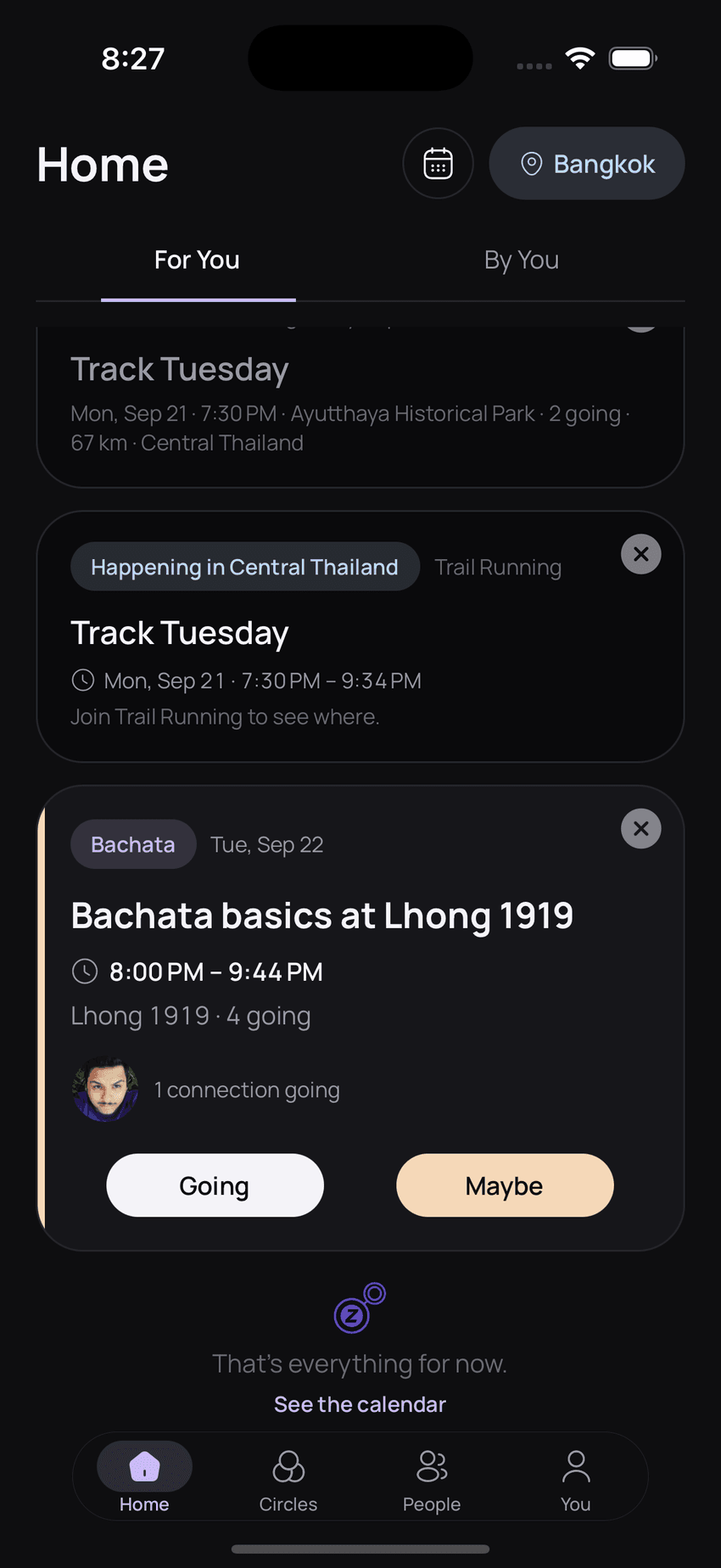
After the event
The app that remembers who you met.
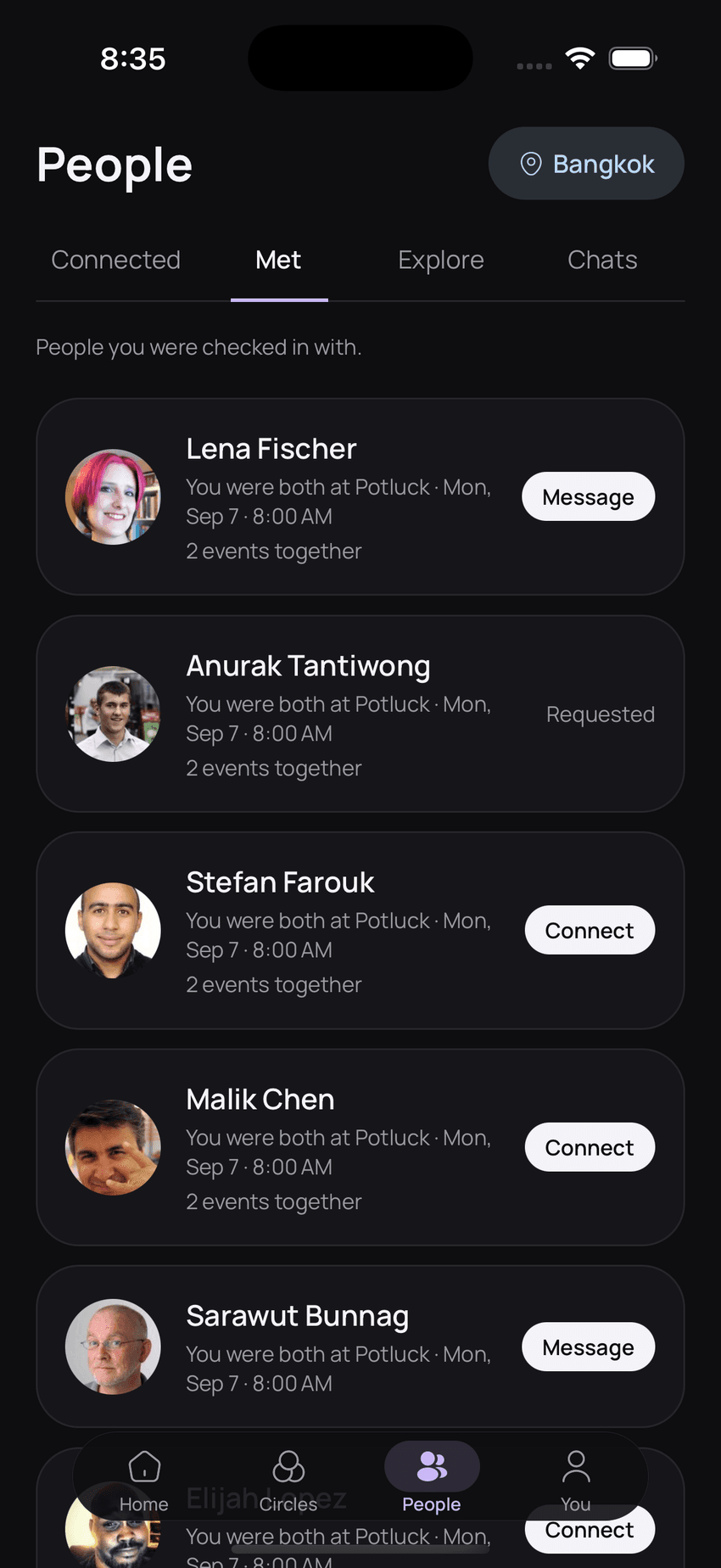
Check in when you arrive, and the next morning you see who was there. They stay on your Met list with the event you shared, so the people from Saturday are faces you know by the next one.
- 1
Check in
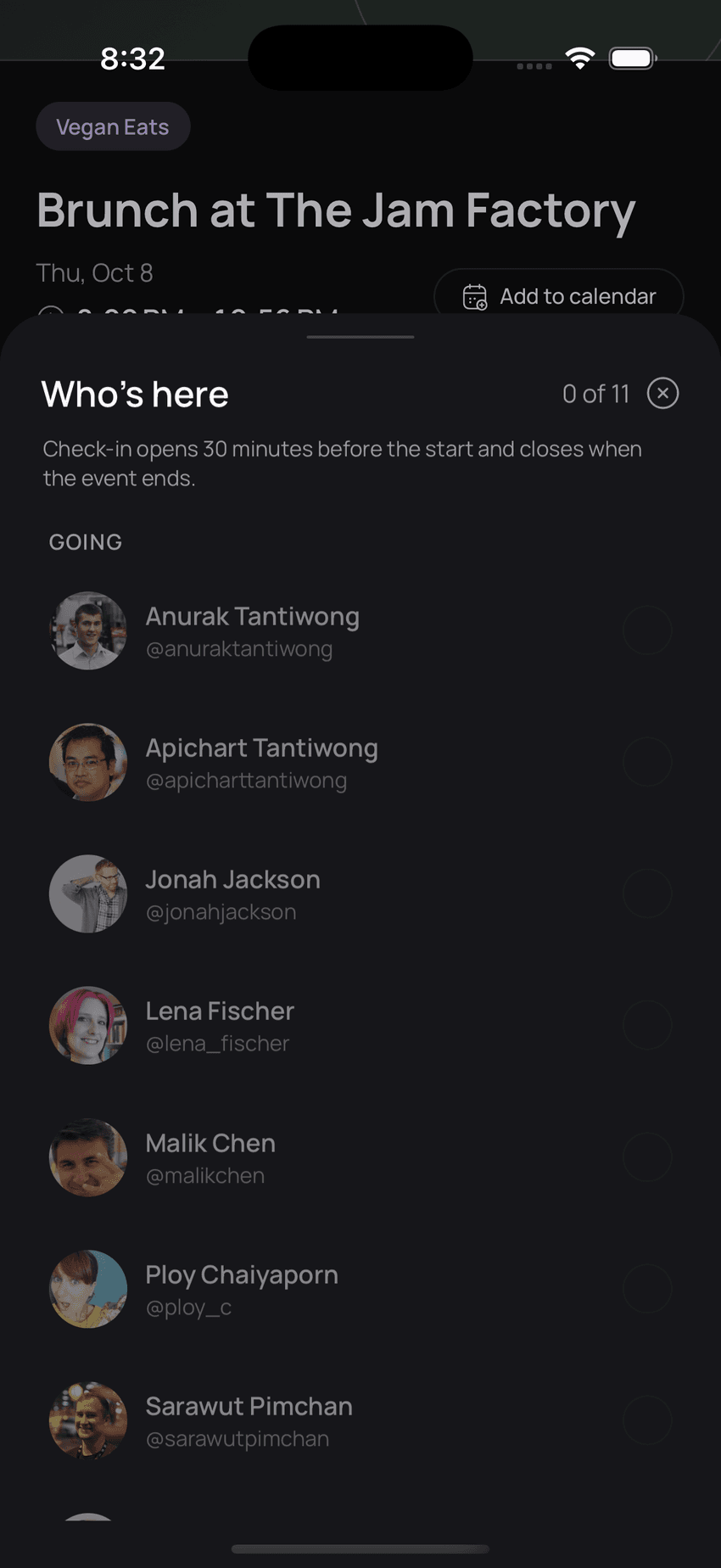
When you get there, tap I’m here on the event, or the host taps your name in Who’s here.
- 2
The next morning
Home shows you who else was checked in, with a Connect button beside each of them.
- 3
Your Met list
They stay under People, each with the event you shared and how many you’ve been to together.
Circles, not followers.
There is no one to follow. Everyone on your Met list was checked in at an event with you, and nobody is shown who didn’t come.
What it is
Four things, and they stay true.
In common
Every profile leads with what you actually share: the circles you’re both in, the values you both chose. Tap anyone on an event and see it before you go. If you like this sort of thing, add MBTI, Enneagram and your sun, moon and rising — all optional, and you can remove any of it. There is no compatibility score.
Again
You join the interest in a city, not an organiser’s group and not one event. Membership is you, that circle, that city — so when a different organiser puts something on, it lands in the same place, in front of the same people. Then you go, and next week you go again, and after a month those are the faces you know.
Calm
There is no feed. Home is a short stack of cards covering the days just ahead, and it ends. Nothing to scroll, nothing to catch up on, nothing counting how long you looked.
Private
Apart from your city, every location setting is off until you switch it on. Nearby is rounded to about a kilometre and only people in your circles see it. Nobody can see your exact location, and it’s never saved to your profile. You can report a profile, a message or an event, and block anyone from their profile. Nobody is told who reported or blocked them.
How it works
Five steps. The fifth is the point.
- 1
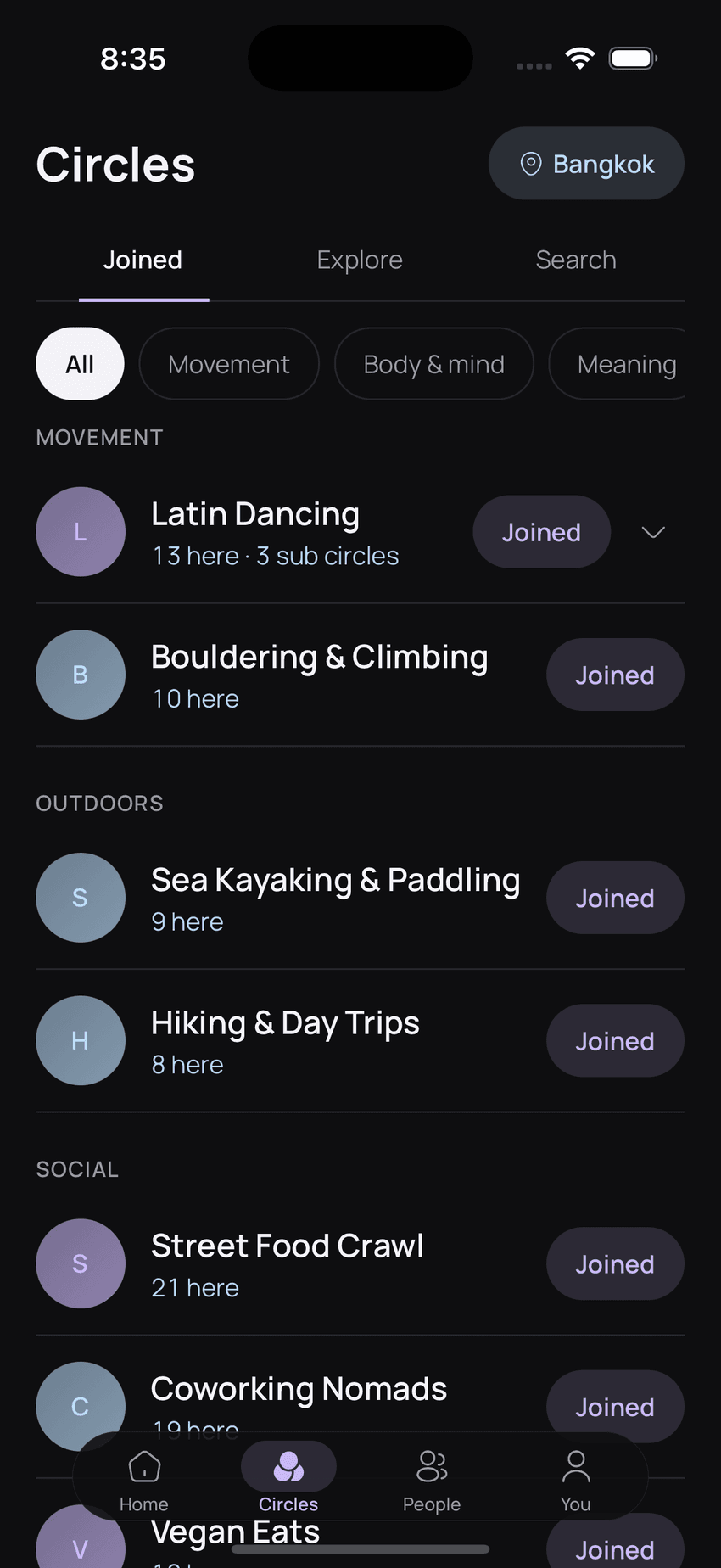
Join a few circles around what you already do.
- 2
See events in your city over the next few days, posted by the people who run them or listed from their own pages.
- 3
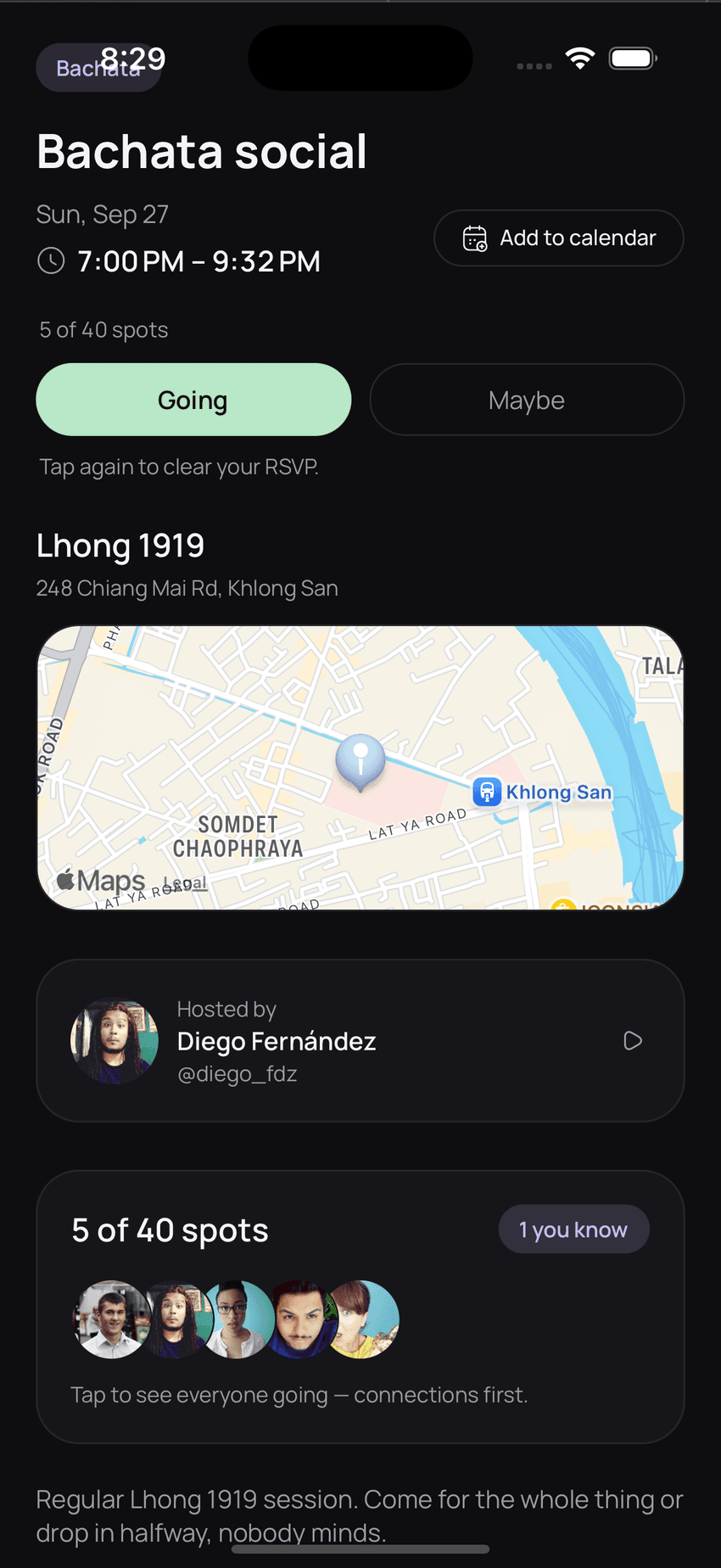
RSVP, see who's going, and go.
- 4
The host checks you in, and the next morning you see who else was there.
- 5
Meet them again next week, in the same circle.
Hosts
If you host something
If you already run a weekly class, run, sit or social, post it to the circle it belongs to. You keep your own door and your own link, you keep all of your money, and you get newcomers from the circles nearest yours. After each one, you see how many people checked in and how many were new to you.
Zonori does not organise events, sell tickets, or handle payment.
Circles
Circles are interests, not brands
A circle is a general interest — “Latin Dancing”, not a studio’s name. Nobody owns a public circle, and nothing anyone buys gives them control of one or access to another member. New circles and events are reviewed against published guidelines before they appear.
- Running
- Board Games
- Language Exchange
- Latin Dancing
- Wellness
- Conscious Dance
Each one has a chapter in your city.
Cities
A new city, the same circles
Hold up to three cities and switch between them. Bring your circles with you when you move, so your first week somewhere new starts with a plan instead of a search.
Where Zonori is live
New places go live every week. These are live now:
Not here yet? See what's on, and check back soon.
Founder
Built by one person
Zonori is built and run by Shaquille Hinds, on his own. It’s on the App Store and Google Play, and anything paid in it is sold in-app by the store, never by Zonori: he builds it. Zonori never takes a cut of anyone else’s money.
Shaquille Hinds
Founder and engineer
Shaquille is a React Native, TypeScript and Node.js engineer, and the author of a family of published npm packages — including the one Zonori is built on. He designed and built the app and its API himself, using Claude Code agents for implementation. He is Barbadian and has lived nomadically — Tokyo, then Manila, then Bangkok — where he goes to ecstatic dance, kirtan, bachata and kizomba, and has run small facilitated group sessions. He is the customer.
“The hard part isn’t finding events. It’s the second meeting. The stack ends at a link and a group chat. Zonori has no feed: you pick a few interests in one city, see what’s coming up, see who’s going before you go, and what you have in common. Whether that produces a second meeting is what I’m testing.”
Where it’s going
Every city has more going on than anyone can see, spread across organisers who will never share a database. Zonori is the layer that makes it continuous — so the people you meet on Saturday are the people you recognise on Wednesday, and a place stops being somewhere you live and becomes somewhere you know people.
A connection tool, not a social network. No feed. Nothing to scroll. Home empties.